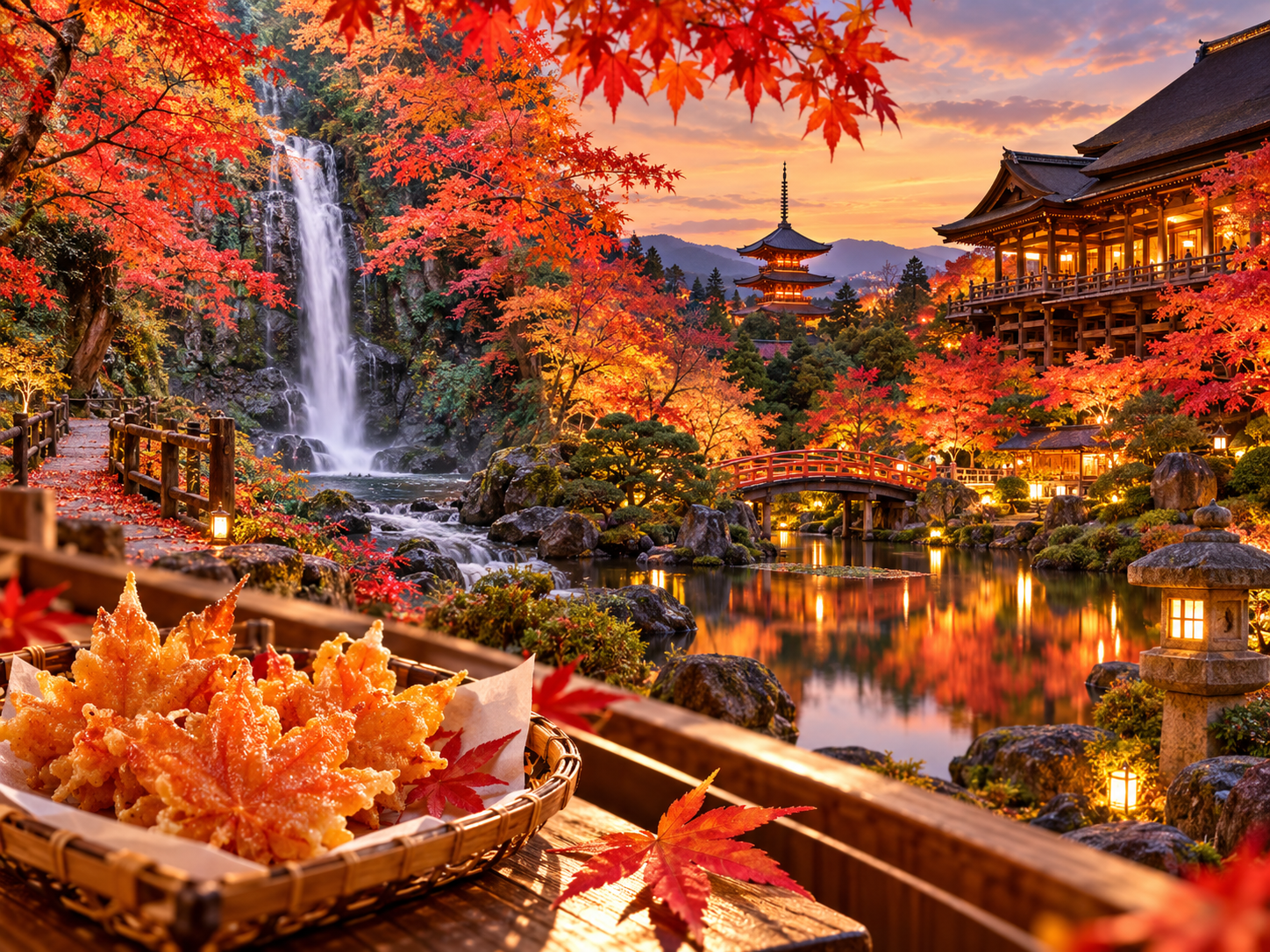
Where to enjoy momijigari in Kansai — from Kyoto’s illuminated temples to Osaka’s waterfalls and edible maple leaves.
If you’re visiting Japan in autumn, there’s something wonderful you should know.
In Japan, people go “hunting” for colorful leaves!
It’s called momijigari (紅葉狩り), or autumn leaf viewing. Rather than hunting anything, people visit temples, gardens, mountains, and parks to admire the changing colors.
And Kansai — particularly Osaka and Kyoto — offers some spectacular places to enjoy it.
But where should you go? Do you need a reservation? How much does admission cost? And can you see the leaves illuminated at night?
Here are six destinations to consider for autumn 2026.
Information checked on October 23, 2026. Dates, admission fees, access conditions, and foliage conditions may change. Always confirm current information with the venue before visiting.
- 1. Minoh Falls, Osaka — A Waterfall Surrounded by Autumn Colors
- 2. Katsuo-ji Temple, Osaka — Autumn Leaves and Red Daruma Dolls
- 3. Hōnen-in Temple, Kyoto — A Quiet Autumn Walk
- 4. Eikandō Temple, Kyoto — Famous Maple Leaves by Day and Night
- 5. Kōdai-ji Temple, Kyoto — An Illuminated Autumn Garden
- 6. Arashiyama, Kyoto — Mountains, River Views, and Autumn Scenery
- At a Glance: Admission Fees and Reservations
- What Autumn Souvenirs Should You Buy in Kansai?
- Essential Tips for Autumn Travel in Kansai
- Discover Momijigari Through a Japanese School Story
- Useful Official Websites
1. Minoh Falls, Osaka — A Waterfall Surrounded by Autumn Colors
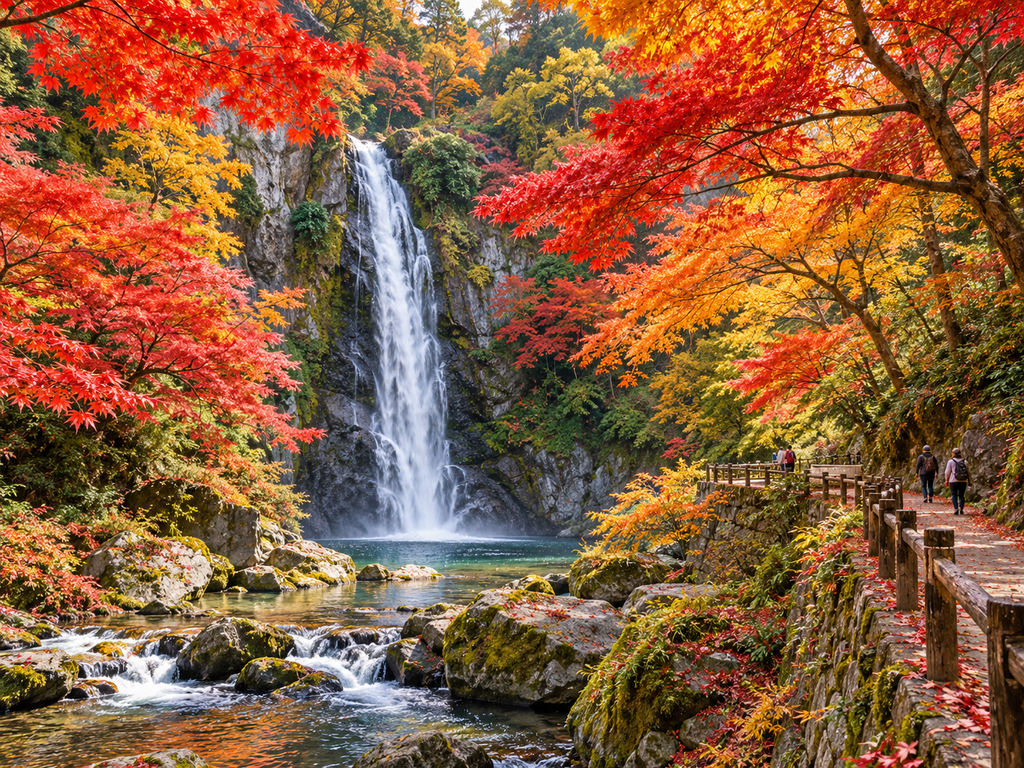
Imagine a waterfall framed by brilliant red and golden leaves.
Minoh Falls is one of Osaka’s most memorable autumn landscapes.
The waterfall is approximately 33 meters high and is reached by following a scenic riverside walking trail through Minoh Park.
In autumn, maple leaves brighten the surrounding forest. Fallen red leaves may float along the stream, while their reflections add color to the water.
Visitor information
Location: Minoh City, Osaka
Admission: Free to enter Minoh Park and view the waterfall.
Reservation: Not required for ordinary visits.
Access: Approximately 2.7 km from Hankyu Minoh Station, generally around 40–50 minutes on foot each way.
2026 autumn illumination: November 14–December 6, every evening, from sunset until 9:30 PM.
Best time for autumn colors: Usually mid-November to early December, depending on the weather.
Recommended visit duration: Allow at least 2–3 hours for a comfortable round-trip walk, sightseeing, and snack stops.
Important travel tips
The walking route is relatively accessible for a mountain setting, but it is still a long walk. Wear comfortable shoes.
The park has no public vehicle access to the waterfall. Use public transportation or an appropriate parking area near the station.
Evening visitors should be particularly careful because the route can be dark, wet, or slippery. Illuminations may be canceled during dangerous weather.
Don’t miss: Momiji tempura!
Minoh is famous for momiji tempura, a crispy, lightly sweet snack made from specially prepared edible maple leaves.
Yes — you can really eat maple leaves in Osaka!
More about this unusual local treat later in the article.
Official information: Minoh Park
2. Katsuo-ji Temple, Osaka — Autumn Leaves and Red Daruma Dolls
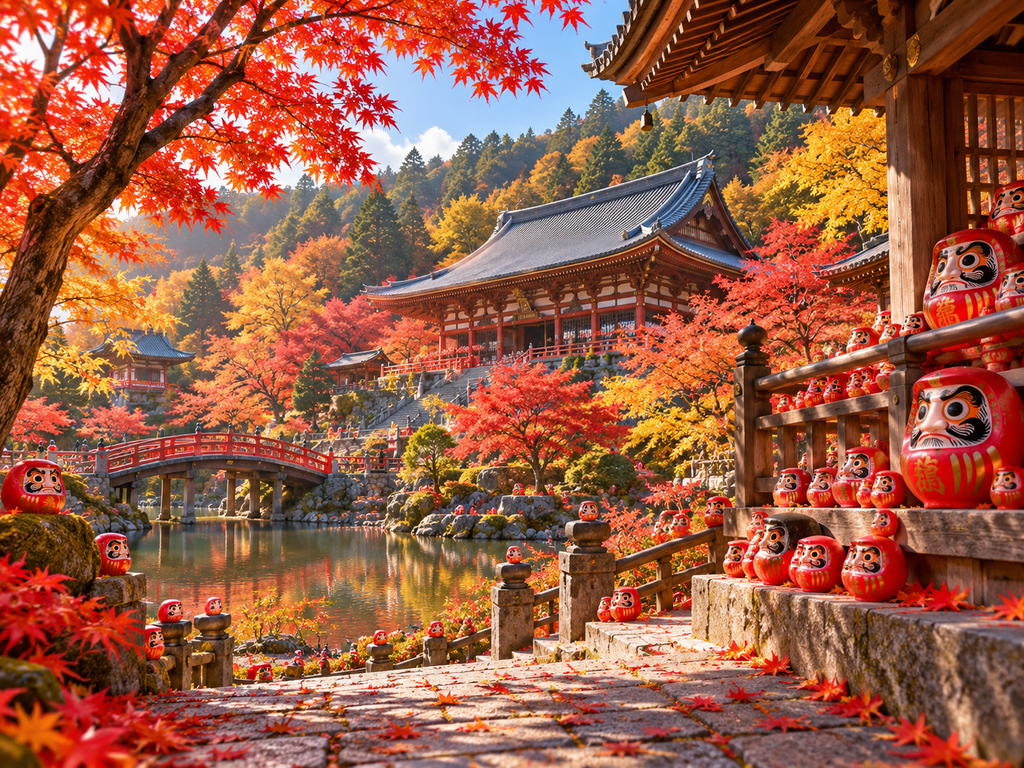
Katsuo-ji is one of the most distinctive autumn destinations in northern Osaka.
The temple grounds feature colorful foliage, traditional architecture, and countless small red daruma dolls.
These dolls are associated with determination, wishes, and perseverance.
During autumn, their bright red color creates a striking contrast with the maple trees.
Visitor information
Location: Minoh City, Osaka
Admission: Adults aged 16 and above (high school age and older): ¥500; elementary and junior high school students: ¥400; children aged 3–5: ¥100; children aged 2 and under: free.
Reservation: Advance booking is not mandatory for ordinary individual admission. Web admission tickets are available.
Important parking rule: On weekends, public holidays, and designated dates, private-car parking is reservation-only.
Access: Take a bus from Minoh-Kayano Station on the Kita-Osaka Kyuko Line. The journey takes approximately 20 minutes.
2026 autumn illumination: Weekends and public holidays from November 1–29, from sunset until 8:30 PM. Last admission is at 8:00 PM.
Best time for autumn colors: Generally mid-November to early December.
Why visit?
Katsuo-ji combines autumn foliage with another memorable Japanese cultural experience: daruma.
It’s a particularly interesting stop for visitors who enjoy taking photographs and learning about local traditions.
If visiting during the night illumination, check the special bus service and the latest parking arrangements before departure.
Official information: Katsuo-ji Temple
3. Hōnen-in Temple, Kyoto — A Quiet Autumn Walk
Not every autumn destination needs dramatic lighting or huge crowds.
Hōnen-in, located in Kyoto’s Higashiyama area near the Philosopher’s Path, offers a quieter and more intimate atmosphere.
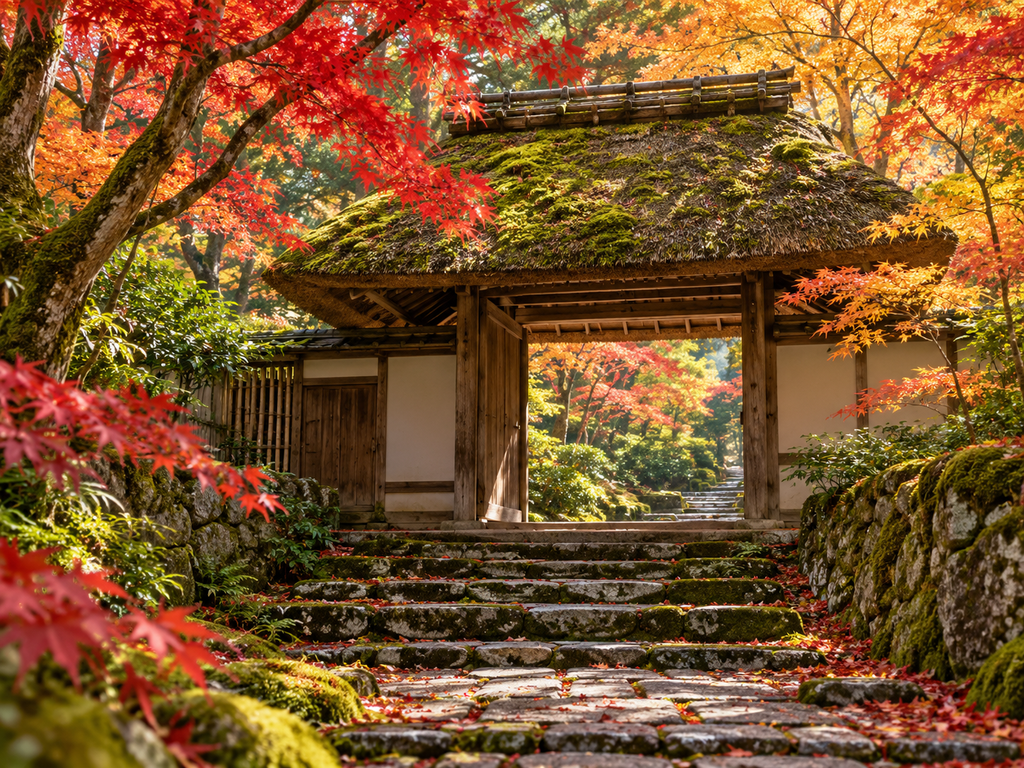
Its thatched entrance gate, moss-covered surroundings, and seasonal foliage make it a lovely place to slow down.
In autumn, red and golden leaves frame its traditional architecture.
Visitor information
Location: Sakyo Ward, Kyoto
Admission: Free for the normally accessible temple grounds.
Reservation: Not required for ordinary visits to the grounds.
Opening hours: Generally 6:00 AM–4:00 PM.
Autumn illumination: No 2026 nighttime illumination confirmed for this guide.
Access: Take a bus toward the Jōdoji area and walk approximately 10 minutes from Jōdoji bus stop.
Best time for autumn colors: Typically November, with timing depending on the weather.
Important travel tips
The freely accessible outdoor grounds are different from the temple’s main buildings.
The main hall and other buildings are generally only opened during designated special openings. Do not assume you can enter them on a regular visit.
Hōnen-in is best enjoyed as a peaceful daytime stop, perhaps combined with a walk along the Philosopher’s Path.
Best for: Quiet scenery, photography, traditional architecture, and travelers who want a slower experience.
4. Eikandō Temple, Kyoto — Famous Maple Leaves by Day and Night
Eikandō, also known as Zenrin-ji, is one of Kyoto’s best-known autumn foliage temples.
Thousands of maple trees brighten the temple grounds, with colorful leaves reflected in the ponds.
The autumn season also brings special exhibitions and nighttime illuminations.
Visitor information
Location: Sakyo Ward, Kyoto
Daytime autumn exhibition: November 11–December 6, 2026.
Daytime adult admission: ¥1,500 for the special autumn exhibition. Discounts and different admission categories apply to some students.
Daytime hours: 9:00 AM–4:00 PM for reception; closes at 5:00 PM.
Night illumination: November 20–December 6, 2026.
Night admission: ¥1,000 for junior high school students and older.
Night hours: 5:30 PM–9:00 PM, with last admission at 8:30 PM.
Reservation: No general mandatory advance reservation identified for individual visitors; confirm arrangements before visiting.
Access: Approximately 15 minutes on foot from Keage Station on the Kyoto Subway Tozai Line.
Important travel tips
Daytime exhibitions and nighttime illuminations are separate admissions.
Visitors cannot assume that a daytime ticket allows them to remain through the evening.
Eikandō is extremely popular during the peak foliage period, so queues and congestion are possible.
Official information: Eikandō Temple
5. Kōdai-ji Temple, Kyoto — An Illuminated Autumn Garden
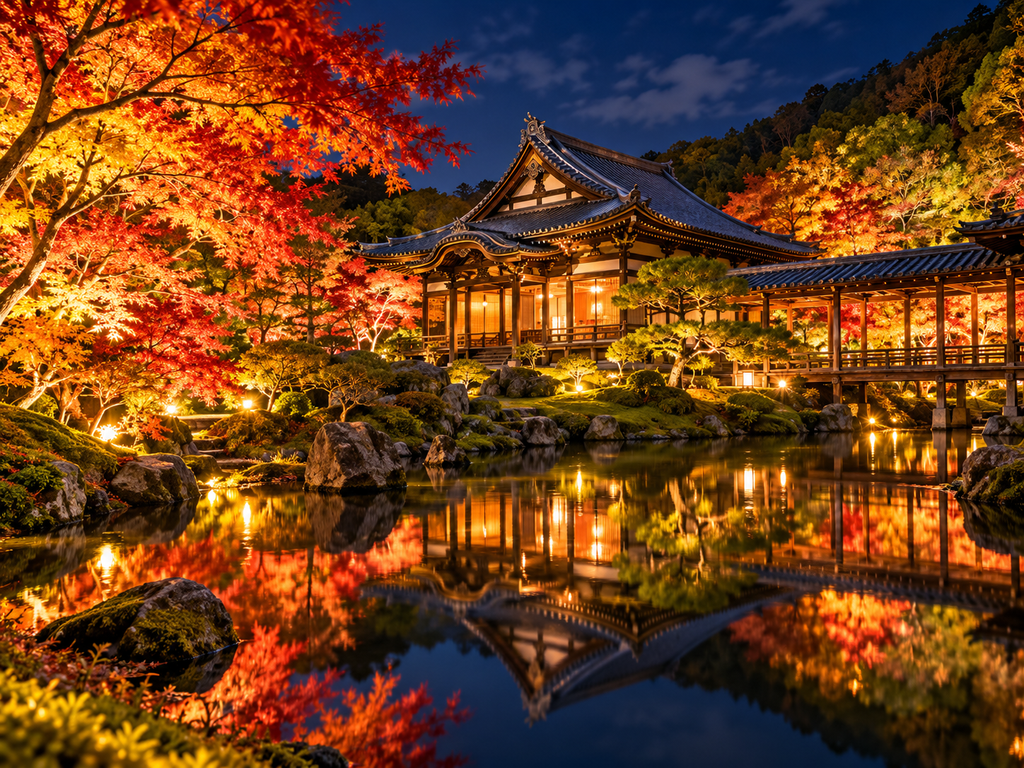
Kōdai-ji is another excellent choice for visitors who want to experience autumn in Kyoto after sunset.
Its traditional gardens, reflective pond, and illuminated architecture create a beautiful evening atmosphere.
The 2026 autumn event also features projection-mapping effects in the temple garden.
Visitor information
Location: Higashiyama Ward, Kyoto
2026 autumn night event: October 23–December 13.
Illumination starts: 5:00 PM.
Last admission: 9:30 PM.
Closing time: 10:00 PM.
Admission: Adults ¥800; junior and senior high school students ¥400. Elementary-school-age children and younger are free when accompanied by a guardian.
Reservation: General admission does not normally require advance booking.
Access: Approximately 7 minutes on foot from the Higashiyama Yasui bus stop, or around 15 minutes from Gion-Shijo Station.
Why visit?
Kōdai-ji offers a combination of traditional Japanese scenery and creative nighttime lighting.
It is an appealing choice for visitors who want to spend the day exploring Kyoto before experiencing illuminated gardens in the evening.
Official information: Kōdai-ji Temple
6. Arashiyama, Kyoto — Mountains, River Views, and Autumn Scenery
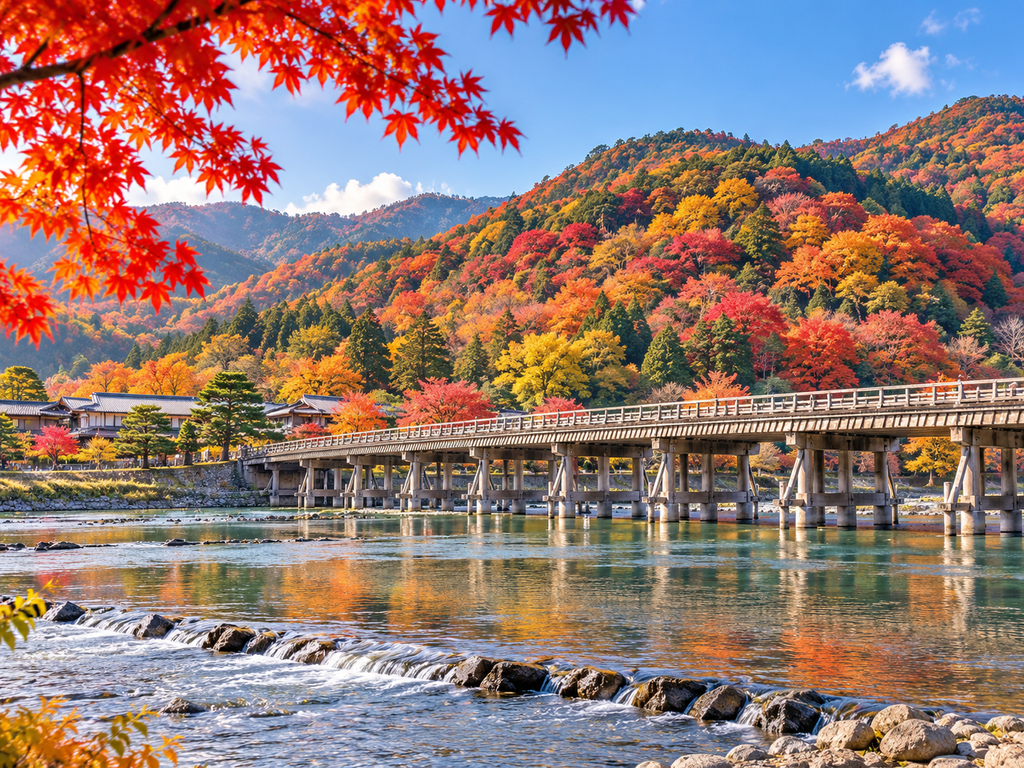
Arashiyama is a scenic district in western Kyoto.
Its most recognizable landmark is Togetsukyō Bridge, which crosses the river against a backdrop of wooded mountains.
During autumn, the surrounding hills turn red, orange, and yellow.
Unlike a single temple, Arashiyama offers an entire area to explore.
Visitor information
Location: Western Kyoto
Admission: Free to walk around Togetsukyō Bridge and the public riverside areas.
Reservation: Not required for ordinary sightseeing around the bridge.
Access: Approximately 5 minutes on foot from Hankyu Arashiyama Station to the bridge.
Best time for autumn colors: Usually mid-November to early December.
Illumination: Special paid events may be held in the wider Arashiyama area. These are separate from free daytime sightseeing and may require tickets.
What else can you explore?
You can combine the scenery around Togetsukyō Bridge with nearby traditional streets, gardens, and temples.
Be aware that some individual temples and private attractions charge admission even though the public riverside is free.
Arashiyama can be busy during peak autumn weekends. Visiting early in the morning may make walking and photography more comfortable.
At a Glance: Admission Fees and Reservations
| Place | Adult admission | Reservation | Night illumination |
|---|---|---|---|
| Minoh Falls | Free | Not required | Nov 14–Dec 6 |
| Katsuo-ji | ¥500 | Not mandatory for entry; parking reservation required on certain days | Selected dates Nov 1–29 |
| Hōnen-in | Free grounds | Not required for ordinary grounds | Not confirmed |
| Eikandō | ¥1,500 daytime; ¥1,000 nighttime | No mandatory general advance booking identified | Nov 20–Dec 6 |
| Kōdai-ji | ¥800 | Normally not required | Oct 23–Dec 13 |
| Arashiyama / Togetsukyō | Free public areas | Not required | Event-specific |
All figures are for 2026. Temple fees, student discounts, event rules, and ticket arrangements may change.
What Autumn Souvenirs Should You Buy in Kansai?
Autumn in Japan isn’t only about photographs.
It’s also an opportunity to find unusual seasonal gifts and local crafts.
Momiji tempura — Minoh’s edible maple leaves
Minoh’s most distinctive autumn-themed souvenir is its traditional momiji tempura.
The snack is sold year-round, although it feels particularly appropriate during the autumn foliage season.
Look for packages to bring home after visiting Minoh Falls.
Limited-quantity flavored maple-leaf snacks
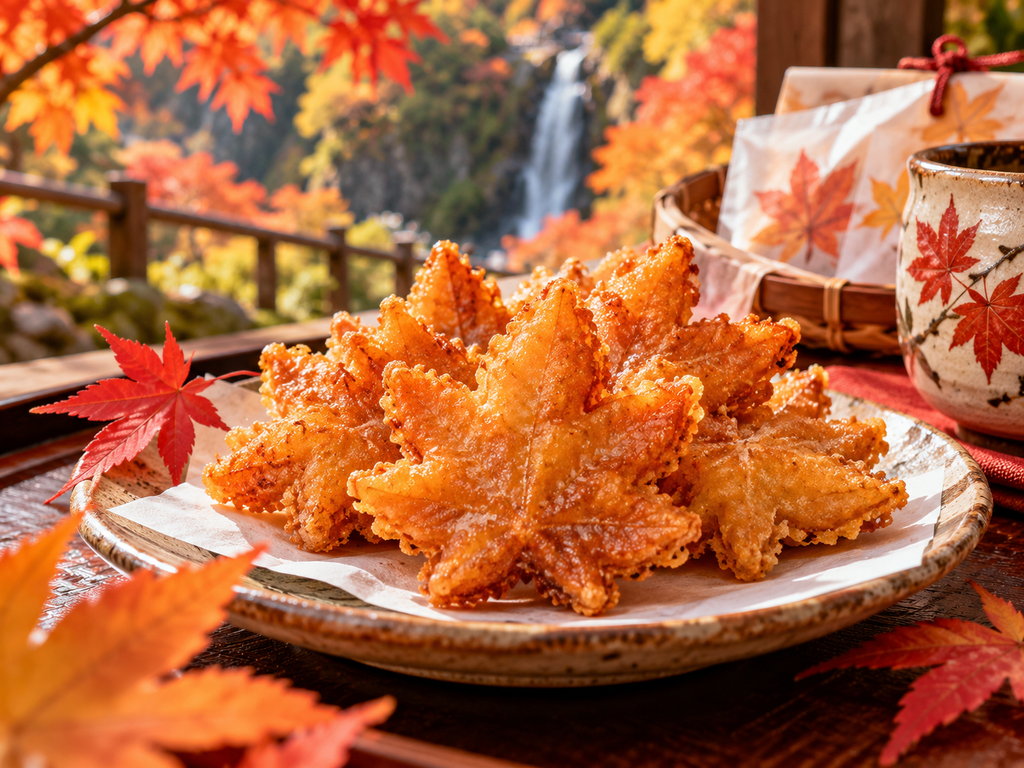
Some local shops offer flavored variations of momiji tempura in limited quantities.
For example, Kobeni, associated with Hisakuni Kōsendō, is listed by the Minoh Tourism Association as a limited-quantity product released periodically.
Availability should be checked directly with the shop.
Maple-themed Minoh pottery
Minoh-yaki pottery includes traditional pieces decorated with autumn maple designs.
These can make memorable souvenirs if you prefer something lasting rather than food.
Seasonal temple souvenirs
During autumn, some temples and local shops offer seasonal designs, including bookmarks, stationery, and traditional keepsakes.
Availability and designs vary, so ask about the current selection rather than assuming a particular item will be sold.
Essential Tips for Autumn Travel in Kansai
Check the foliage before you travel
Autumn colors change with temperature, weather, and elevation.
A spot that was beautiful in late November last year might reach its peak on a different date this year.
Check recent photographs and foliage reports shortly before your visit.
Don’t confuse illumination dates with peak foliage dates
A night illumination event may begin before the trees reach their brightest red.
Likewise, some trees may remain colorful after the main event ends.
Check the last admission time
A temple closing at 9:00 PM may stop admitting visitors at 8:30 PM.
Plan your journey around the last admission time, not just the closing time.
Use public transportation when possible
Some temples have limited parking, while Katsuo-ji requires parking reservations on specific days.
Kyoto’s roads and buses can also become very crowded during the autumn season.
Be prepared for cooler evenings
Autumn evenings, particularly around mountain trails and waterfalls, can feel colder than the daytime.
Bring a light jacket or warm layers.
Respect temple and park rules
Some buildings, gardens, or sacred areas may prohibit photography.
Avoid entering closed areas, using flash where prohibited, or collecting plants from protected grounds.
And remember: the leaves used in edible maple snacks are specially prepared. Never eat random fallen leaves.
Discover Momijigari Through a Japanese School Story
Have you ever wondered what a Japanese teenager might say to an American friend who has never heard of “autumn leaf hunting”?
Meet Alex.
He’s a 16-year-old American student who moves to Osaka and discovers Japanese culture through his friendship with Haru.
In Episode 07 of our original illustrated series, Haru introduces Alex to momijigari.
Alex thinks they might actually be hunting leaves.
Then they visit Minoh Falls, explore the autumn forest, and discover the surprising local tradition of eating maple leaves.
It’s a lighthearted story about friendship, culture, and finding beauty in the changing seasons.
Read the story and explore the series:
Alex in Japan — Official Story Archive
Two cultures. One unforgettable friendship. A new discovery every day.
Useful Official Websites
- Minoh Park
- Minoh Tourism Association
- Katsuo-ji Temple
- Eikandō Temple
- Kōdai-ji Temple
- Kyoto City Tourism Information
Last information check: October 23, 2026. Please confirm current schedules and admission conditions before visiting.